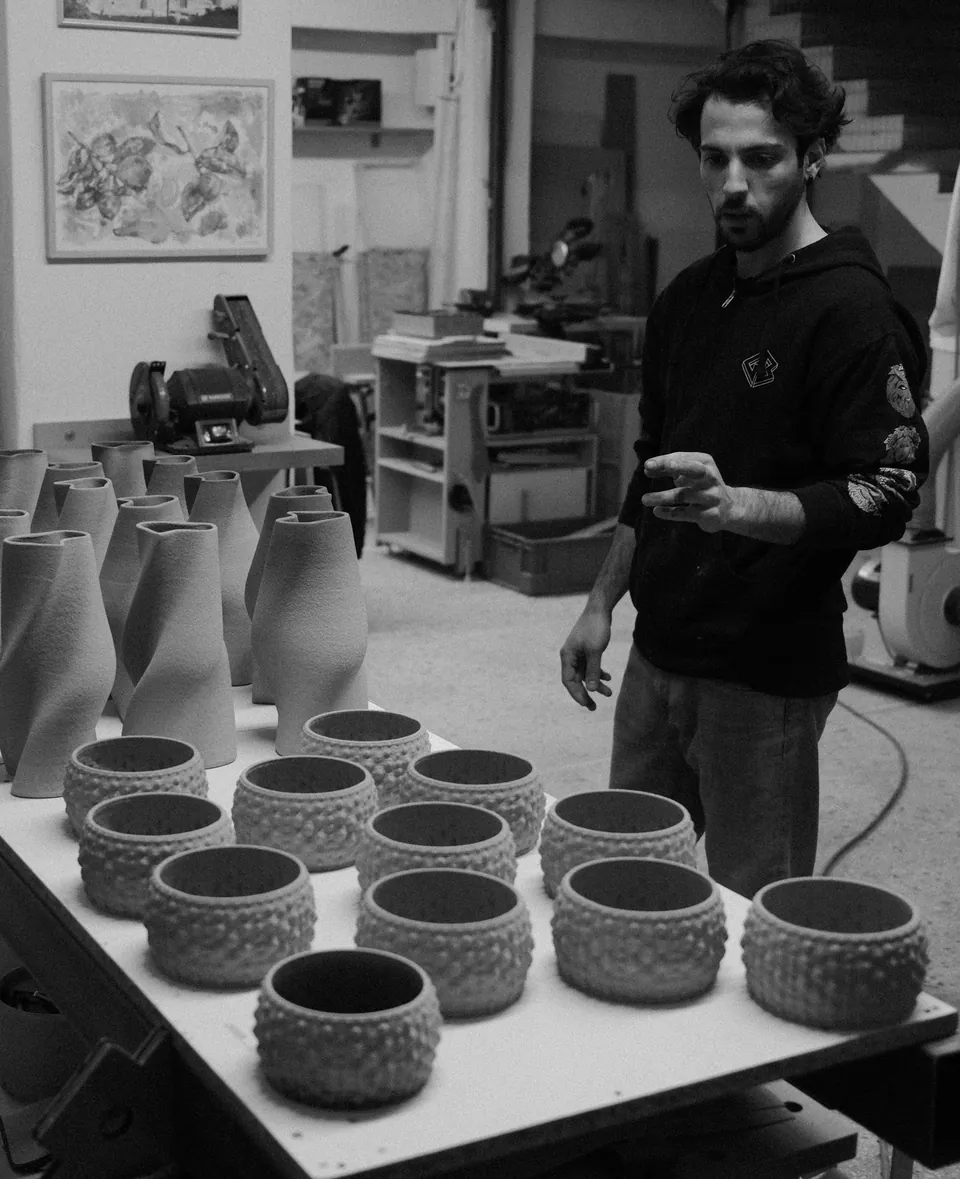
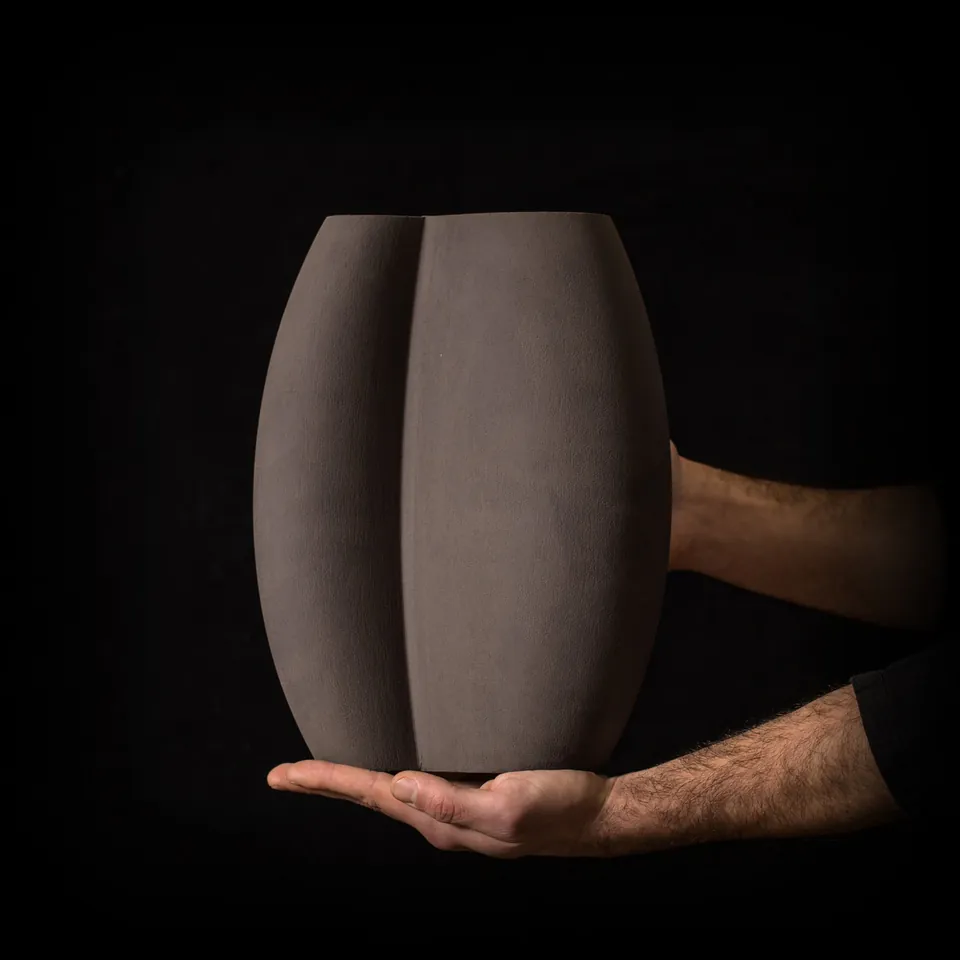
BinaryCeramics started as research and became a studio. I wanted to understand how digital systems and physical materials could coexist in a meaningful way, and clay turned out to be the ideal opponent for a machine.
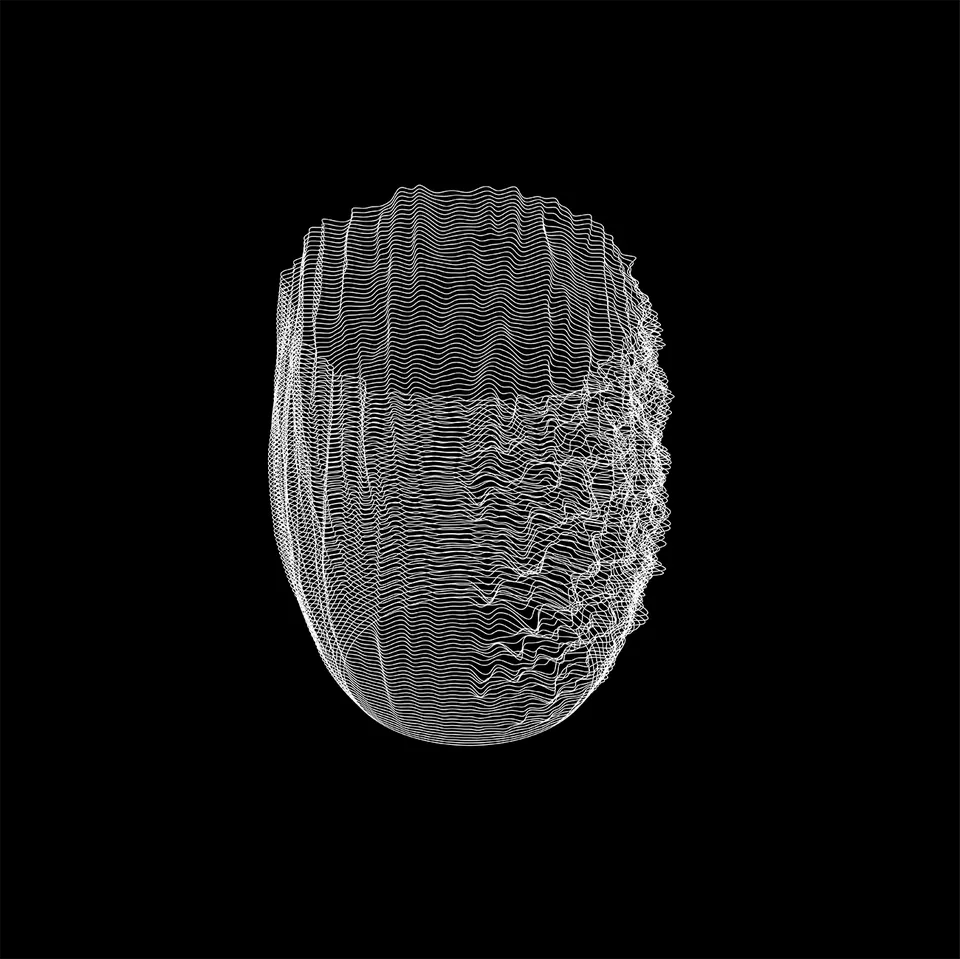
Each collection begins with a rule, a constraint or a dataset: a single continuous line, the rotation of a storm, the amplitude of a song. I don't design a final form. I design a system that produces forms, and each ceramic object is a snapshot of that system at one moment.
The name holds the same duality: the zero and one of code, and the balance the work tries to keep between digital and physical, machine precision and material plasticity, system and intuition.
10 Process
Process
rule → toolpath → machine → kiln
00
Rule
A form begins as a constraint: one line, one rotation, one dataset. Computational design lets complex patterns emerge from very few rules.
01
Toolpath
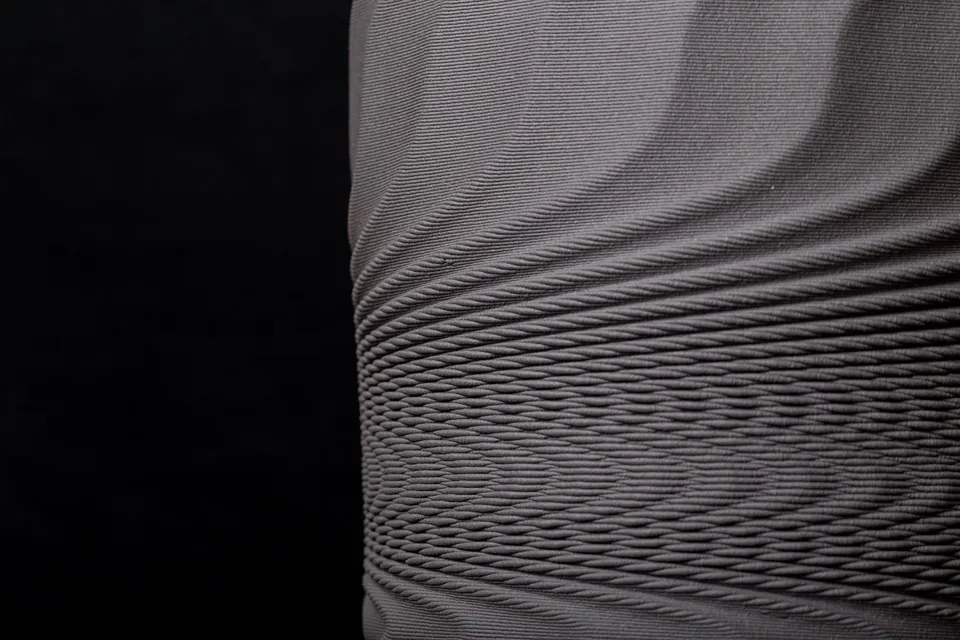
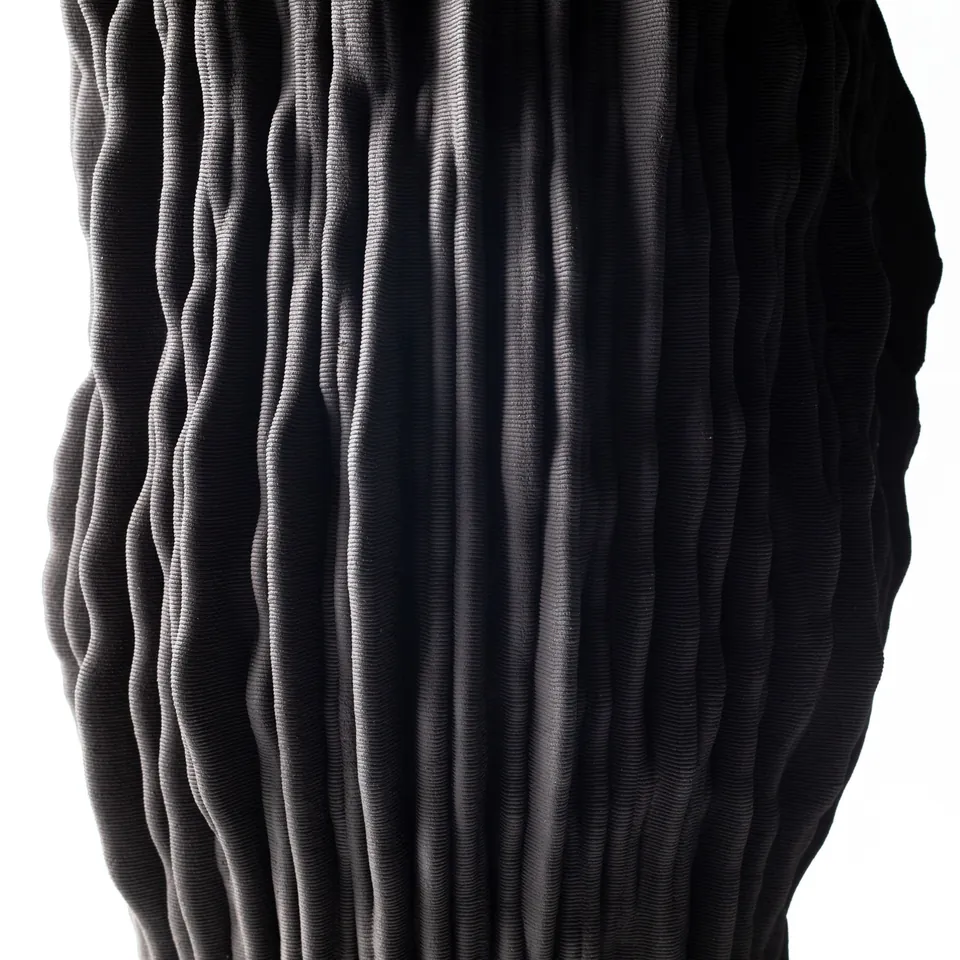
The system is written as a single continuous path for the nozzle, so the surface texture lives in the movement itself.
10
Machine
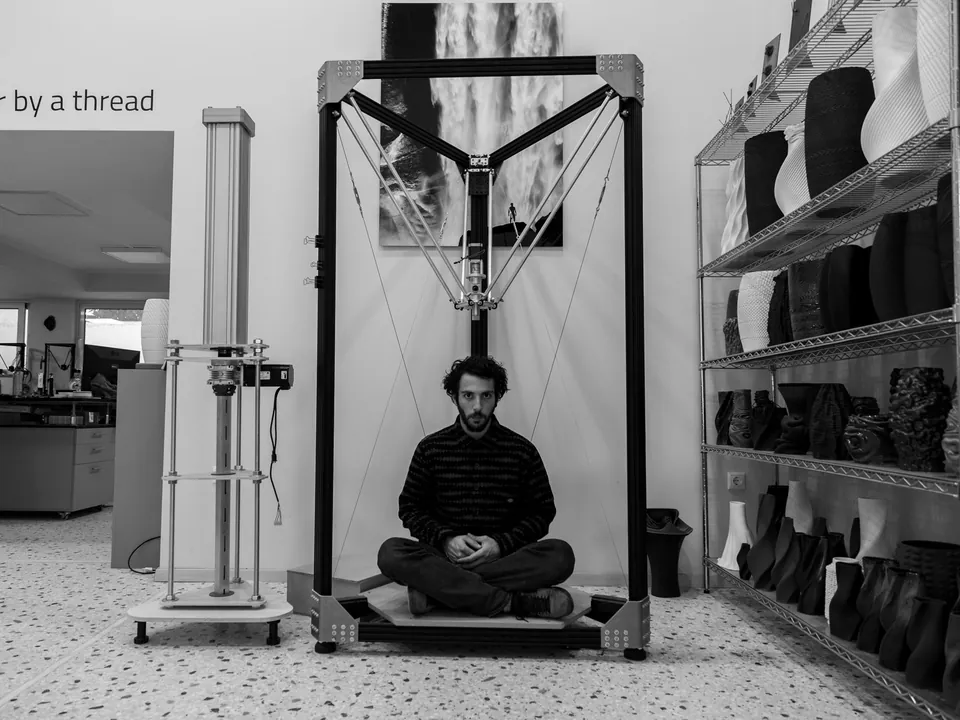
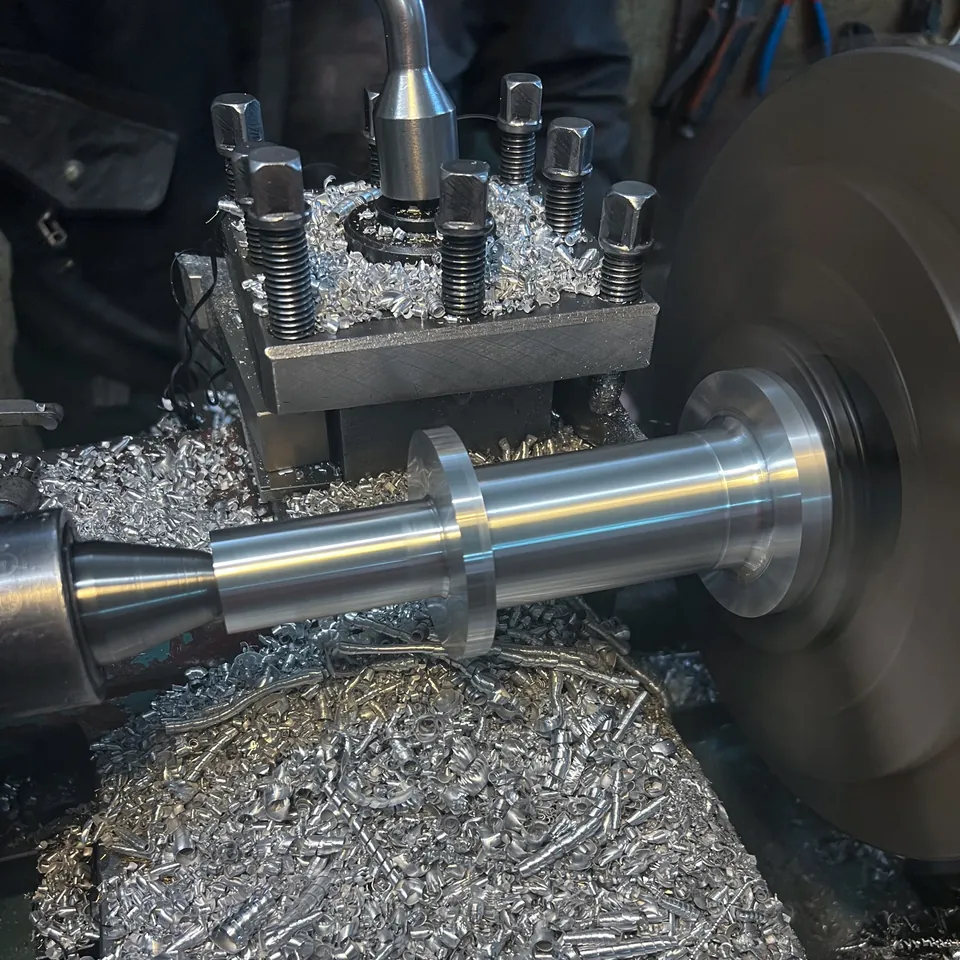
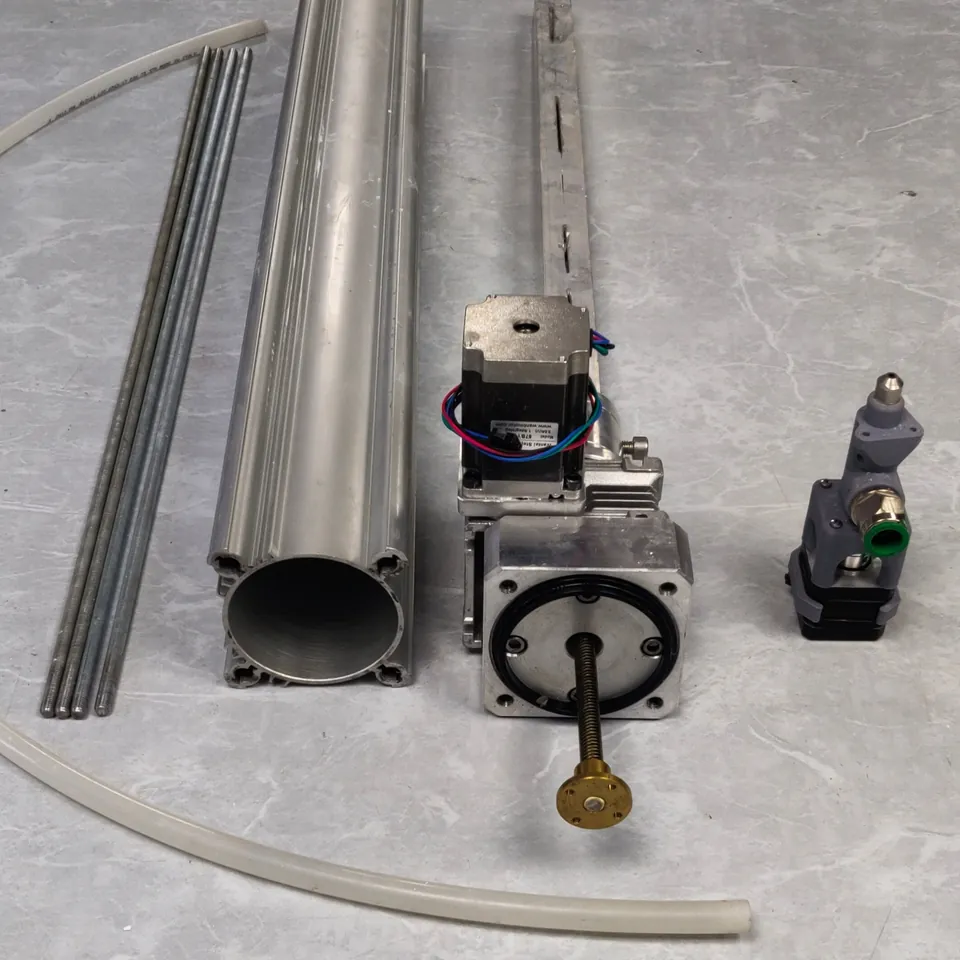
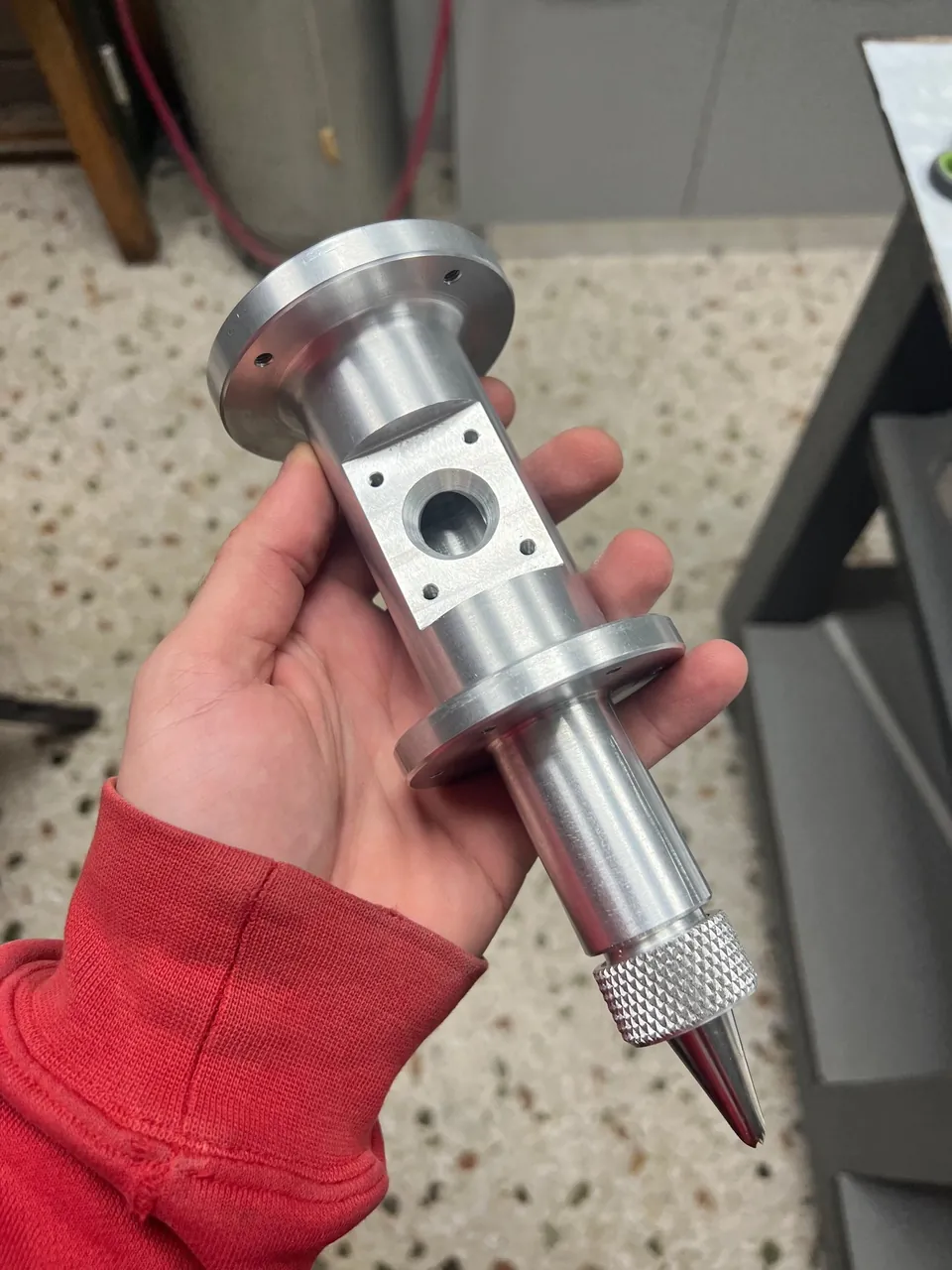
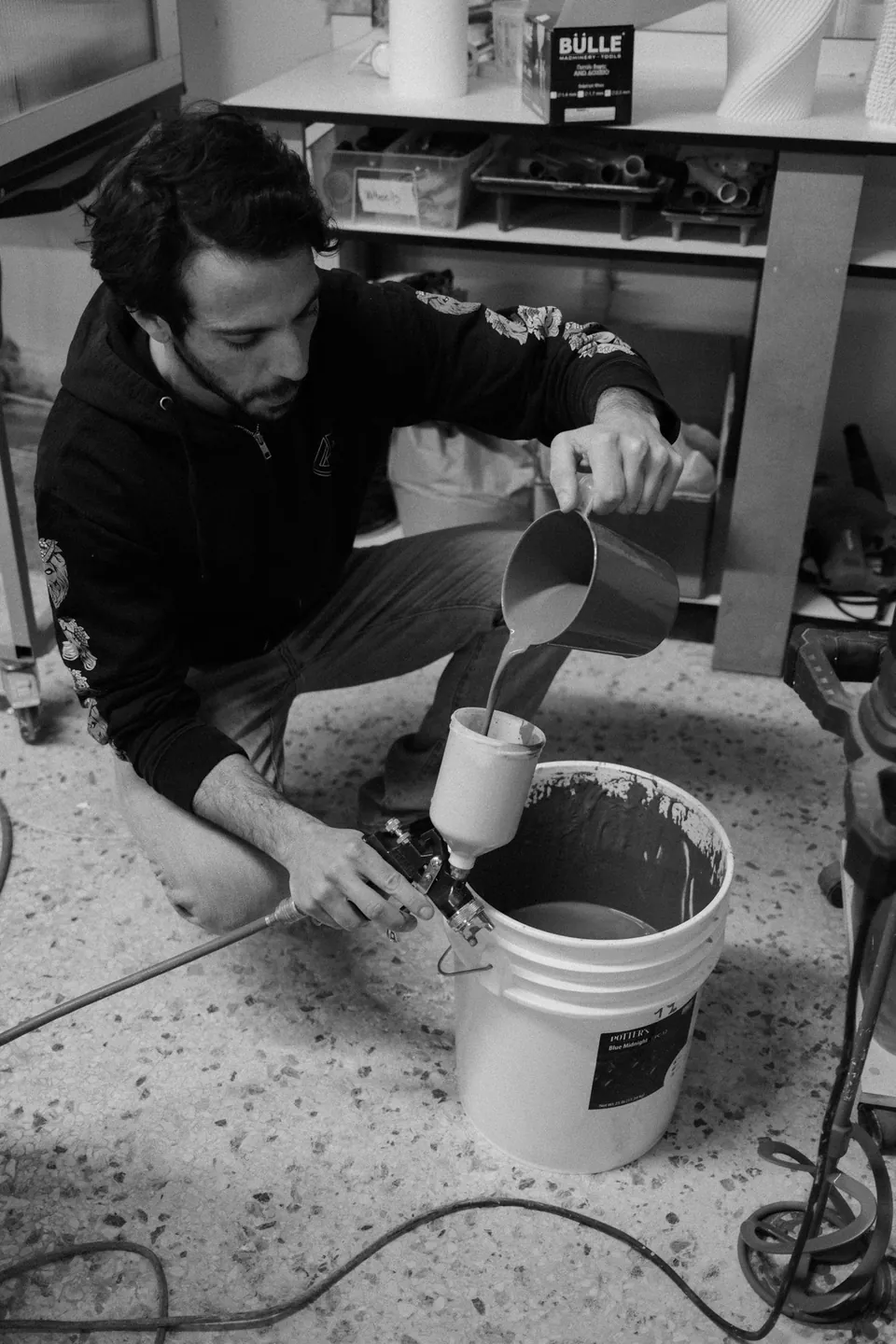
I design and build the printers and extruders, from a large-format delta printer to aluminium ram extruders turned on the lathe.
11
Kiln
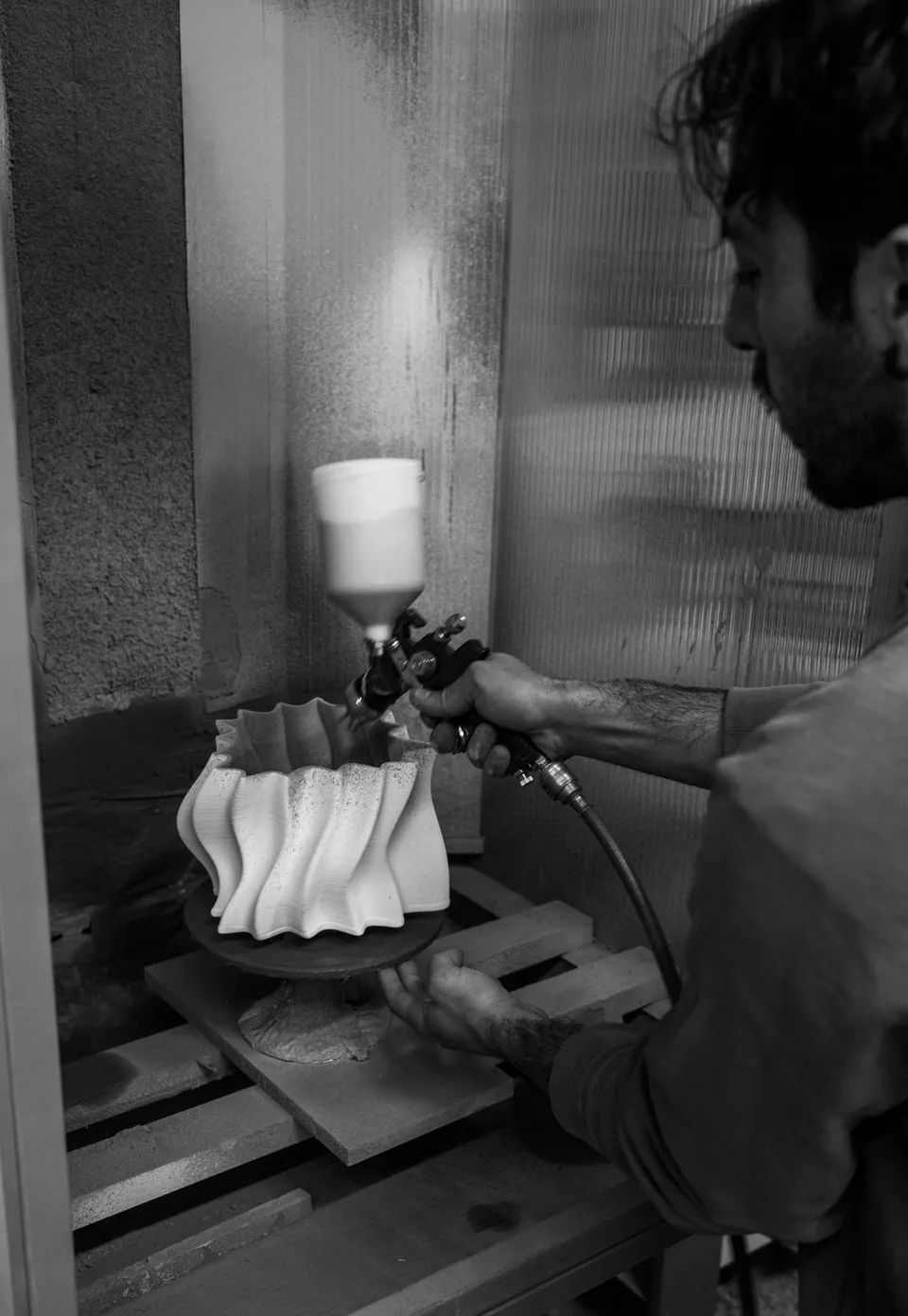
Drying, firing and glazing. This is where gravity, heat and chance finish what the code started.
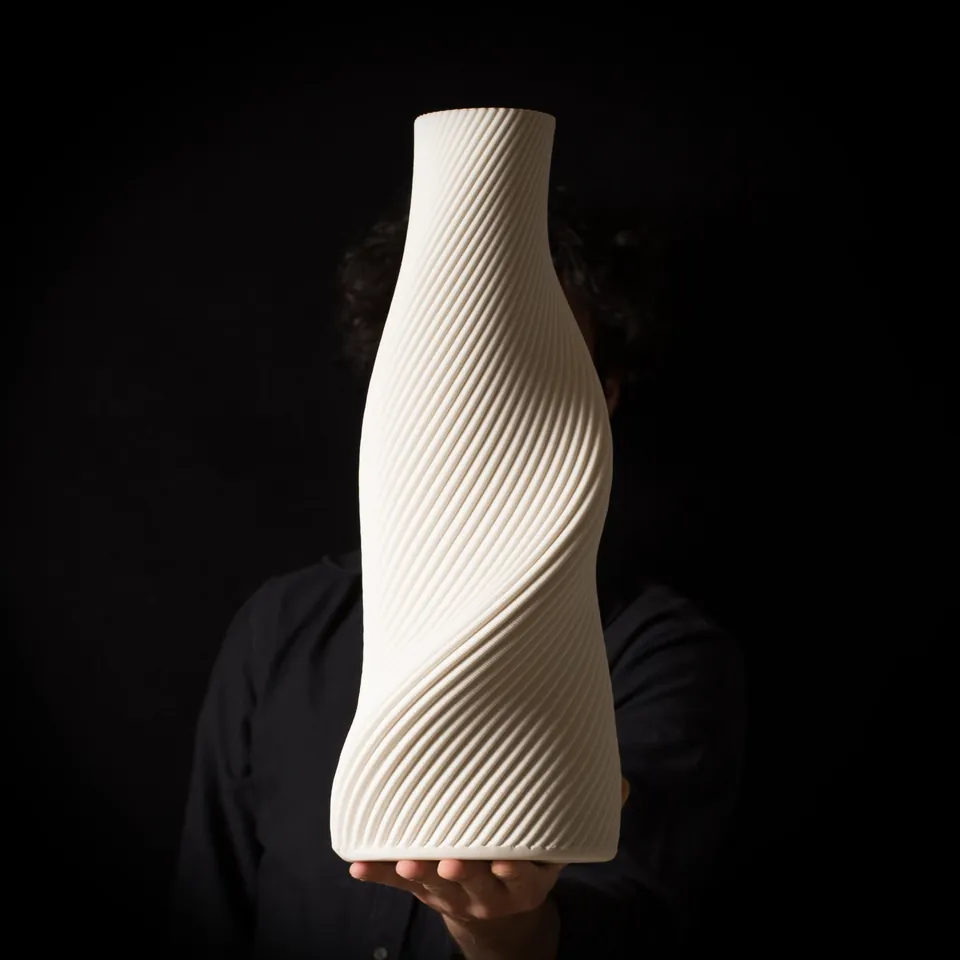
Rotation, warm and cold air, a simple rule that becomes a storm.
A tribute to the raw power of nature and the beauty of its forms. Tornadoes are born from the interaction of warm air, cold air and rotation, simple rules that give rise to some of the most spectacular displays in nature.
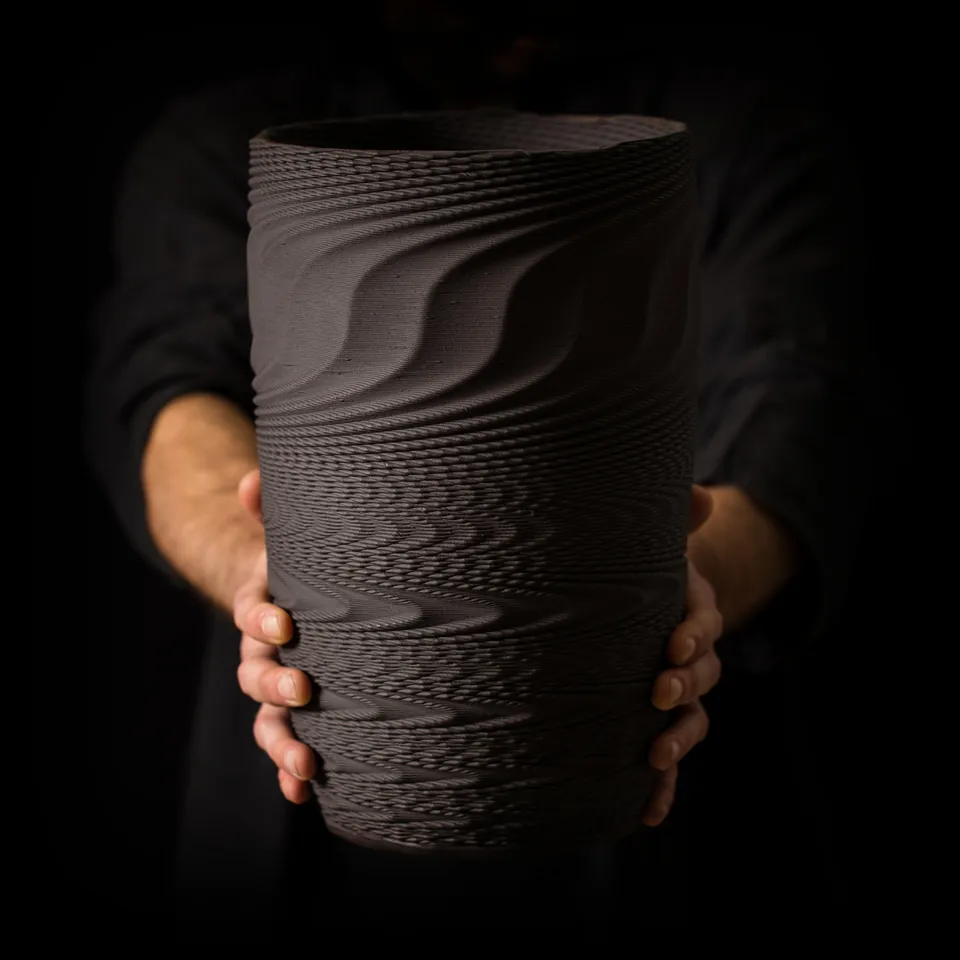
A record of waves, each set slightly different from the last.
Watching the sea, each set of waves arrived slightly different from the last in power and frequency. What if all of them could be recorded? What patterns would emerge, and what form would they take?
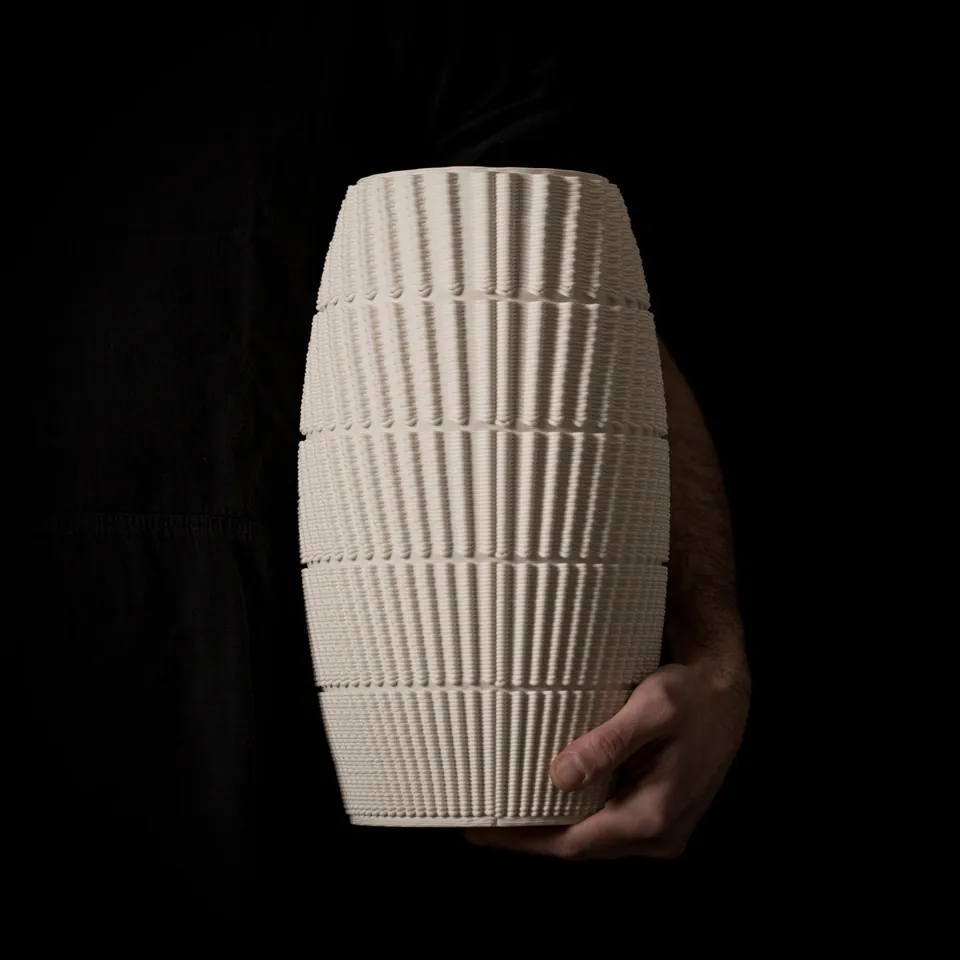
How much complexity can a few simple rules produce?
Four nucleotides write the code of life; the game of Go has more positions than there are atoms in the observable universe. Dash investigates how computational design lets complex patterns emerge from very few rules.
One continuous line that crosses itself into separate volumes.
What can you do with a single curve? Each object emerges from one continuous line. Intersecting the line with itself creates separate volumes, so an idea about union leads to its opposite.
Sound, analysed and encoded into a ceramic surface.
Part of ongoing research into how information is encoded, decoded and changes form. An algorithm analyses passages of music, including frequency and amplitude, and writes them into the surface of the clay.